
Introduction:
CES 2026: The global debut of China’s lighting power
As the "vane" of the global technology industry, CES (International Consumer Electronics Show) has always been the launch site for breakthrough technologies and innovative products since its inception in 1967, and is known as the "Spring Festival Gala" of the technology industry.
The 2026 CES will be held in Las Vegas from January 6 to 9, Western Time. The exhibition area exceeds 2.6 million square feet and brings together 4,177 exhibitors from around the world (EqualOcean on-site statistics), covering nine core areas such as artificial intelligence, digital health, and smart hardware. The official slogan "Innovators Show up" accurately summarizes the core value of this event.
The most eye-catching change in this exhibition is the comprehensive upgrade of Chinese enterprises from "quantity participation" to "quality leadership". According to confirmation from the organizer and authoritative sources such as Huatai Securities and NetEase News, there are 942 Chinese exhibitors, accounting for about 22%, and continues to rank as the second largest participating country in the world (the United States leads with 1,325 companies).
In the field of lighting, Chinese companies have also broken away from their "supporting role" positioning. Companies such as Shenzhen Govee, Broadlink, and Beijing Gewu Century Technology appeared in the main exhibition area with core achievements such as AI lighting, healthy lighting, and interconnected lighting. They competed with international giants and became an important source of global light and shadow technology innovation.
Among them, the Govee brand of Shenzhen Zhiyan Technology has seized the industry focus with its intelligent ecological construction of ceiling lighting, and the health monitoring lighting of Beijing Gewu Century Technology has won innovation awards. These breakthroughs not only demonstrate the technical hard power of Chinese lighting companies, but also mark that China has become a global first-tier echelon in the "AI + lighting" integration track.
The following will combine the highlights of the exhibition to break down the four core trends of lighting technology: "AI empowerment, health advancement, scene reconstruction, and ecological synergy."
01
AI leads the interactive revolution:
From "passive response" to "active understanding"
The most significant breakthrough at this year's CES is the deep integration of AI technology and lighting, which is no longer limited to simple voice control, but realizes "intent recognition - dynamic adaptation - scene co-creation" Full-link intelligence.
Shenzhen Zhiyan Technology's Govee's AI creation engine is a benchmark - the AI Lighting Bot 2.0 it released has evolved into a "light and shadow designer". Users only need to enter text commands (such as "Create the morning mist atmosphere of the forest after the rain"), and the system can automatically generate a lighting scheme including color temperature, brightness gradient, and dynamic effects. With Ceiling Light Ultra's 616-pixel LED matrix, delicate light and shadow animations can be presented on the ceiling.
What deserves more attention is the DaySync adaptive system. It learns the user's work and rest data and fine-tunes the light temperature (1000K-10000K ultra-wide range) every 15 minutes to accurately match the human body's circadian rhythm. Experimental data shows that it can shorten the time to fall asleep by 23%.
Sky Ceiling Light (left) and Ceiling Light Ultra (right) (image source The Verge)
Sky Ceiling Light can simulate daytime light and can be an important supplement for windowless rooms. Its color temperature can be adjusted between 2700K and 6500K. The maximum brightness can reach 5200 lumens at 6500K color temperature.
According to The Verge, Ceiling Light Ultra is called "the industry's first ceiling light that is truly built as a creative canvas." It is equipped with 616 RGB LEDs and supports user-defined creative lighting. In the corresponding Govee App, users can enter text descriptions, and the corresponding lighting scene is generated through the AI lighting robot 2.0 and projected on the lamp.
The surprise brought by Beijing Gewu Technology is even more disruptive to the industry - as a Chinese company that only exhibited one product but became the "winner" of this year's CES, its world-first Sleepal® AI sleep lamp won three innovation awards in Digital Health, Accessibility & Longevity, and Smart Home, becoming a benchmark product across multiple fields. This product completely breaks the limitations of traditional sleep monitoring and innovatively realizes "non-contact and non-sensory monitoring": without wearing any equipment or physical contact, it can accurately capture core sleep data such as respiratory rate and chest rise and fall through the built-in high-frequency millimeter wave radar (detection accuracy reaches 0.1mm), and use self-developed AI algorithms to determine sleep stages. What is even more noteworthy is that the accuracy of its algorithm has surpassed that of mainstream wearable devices, achieving a breakthrough in "space environment-level AI perception" for universal sleep health needs.
The picture comes from Zaker.com
In practical applications, the Sleepal® AI sleep light can intelligently adapt to different sleep scenarios: during light sleep, it automatically dims the lights and plays white noise simultaneously. During the wake-up phase, it accurately captures the light sleep cycle and turns on simulated morning light to avoid the discomfort of being interrupted in deep sleep. The recognition of thousands of CES judges confirms that it is not a single-function lighting product, but is viewed in the comprehensive context of "health + home + long-term value", marking the official transition of sleep monitoring from "wearable" to "space environment level". When AI is deeply integrated into night scenes, smart hardware is also upgraded from a tool attribute to an indispensable part of life, redefining the health management value of lighting equipment.
02
Advanced Healthy Lighting:
From “Visual Comfort” to “Physiological Intervention”
If health lighting in previous years was still at the level of anti-blue light and high color rendering, the technology displayed at CES in 2026 has achieved “phototherapy level” breakthroughs, especially non-contact physiological adjustment has become a new track.
Korean lighting company Korea Lighting's Neurélux brain health lamp has commercialized medical-grade near-infrared technology for the first time, through the synergy of dual wavelengths 810nm and 1064nm: the former is selectively absorbed by brain cell mitochondria, promoting ATP energy generation to repair nerve tissue; the latter penetrates deep brain tissue and improves cerebral blood flow and neuroplasticity through mild thermal stimulation. Clinical tests show that it can improve 37% of attention deficit problems.
This lamp adopts a minimalist design. It can be used as daily lighting, and can also be used to set "focus mode", "sleep recovery mode" and other scenes through the APP, breaking the boundaries between medical equipment and household items.
In the field of basic healthy lighting, Govee's LuminBlend + color system solves the long-standing pain point of "RGB to white light color cast". Through 16-bit color depth adjustment, it ensures that the true color of the object can be restored at any brightness, especially suitable for scenes such as makeup and reading that require high color accuracy.
03
Light and shadow reconstruction:
From “single lighting” to “scene narrative”
The lighting products at this exhibition are no longer isolated light sources, but have become “the language of spatial narrative” through modular design + full scene linkage. Chinese brands have performed outstandingly in indoor and outdoor integrated innovation.
Linkind's outdoor light and shadow system has redefined courtyard lighting: As a smart lighting brand that focuses on overseas markets, its exhibited SP6 smart solar trail lights support APP switching of dynamic light effects and can simulate 12 modes such as fireflies flying and starlight twinkling. The intelligent energy optimization algorithm equipped with the solar panels solves the problem of winter battery life (more than 90 days in actual measurement); Aura paired with SL6C aurora spotlights Scape™ color mixing technology can project 32 layers of gradient light on the building's facade, transforming an ordinary courtyard into an immersive nighttime landscape.
In indoor scenes, linkind's T19 smart light bar further strengthens the core advantage of "full-scene light and shadow linkage": its segmented multi-zone color control design can flexibly fit a variety of carriers such as chandeliers, wall lamps, TV cabinets, etc., and achieves cross-space linkage with SP6 walk lights and SL6C spotlights through the Matter protocol - when the user enters the room from the courtyard, the light bar automatically synchronizes the color temperature and brightness of the outdoor light, forming "Transition of light and shadow without a sense of fragmentation"; when watching movies, the light strips project base ambient light along the wall, forming a "clear narrative structure" with the main lights in the living room, completely breaking the limitations of traditional single lighting scenes.
In addition, the Elements Ultra light and shadow interconnection system (Chinese brand) of Nanoleaf, a subsidiary of Rino Energy Technology, focuses on indoor immersive storytelling: its hexagonal modular light panels use "SceneSync scene synchronization technology" to present "layered light and shadow special effects" based on film, television and music content - the light panels alternately flash red and blue light in the fighting scene, and the romantic bridge section switches to a warm light gradient. With the 360° installation design, light and shadow become an extension of content expression. This product won the TechRadar "Best Intelligent Lighting Innovation Award", confirming the Chinese brand's technological leadership in the field of scene lighting.
04
Ecological collaborative evolution:
From "single product intelligence" to "whole-house interconnection"
The ecological collaboration in the lighting field at this year's CES is characterized by "protocol diversity and interconnection as the core". Matter protocol has become the mainstream choice for cross-brand adaptation. Zigbee, self-developed protocols, etc. are playing their value in segmented scenarios, jointly promoting the implementation of "device collaboration".
GE Lighting's smart curtains and lighting systems are a typical representative of ecological synergy: its Matter-compatible smart curtains support linkage with multiple platforms such as Alexa, Google Home, Apple Home, etc., and can realize scene automation with the Light+Form series of light bulbs - when the curtains are slowly opened in the morning, the light bulbs automatically fade from warm light to 6500K white light that simulates daylight; after the curtains are closed at night, the lights are synchronously dimmed to a suitable brightness for reading. The curtain uses a magnetic rechargeable battery (lasts for 6 months) and a screwless installation design, which solves the pain points of traditional smart curtains such as "complex installation and short battery life".
Broadlink’s Matter super bridge RM MAX solves the pain points of interconnection between new and old equipment: through the “protocol bridging” capability, lighting equipment and traditional infrared lamps using the self-developed FastCon protocol can be unified into the Matter ecosystem. A single gateway can connect up to 4096 devices. It can achieve full-domain control without changing hardware, perfectly adapting to the needs of multiple scenarios such as home and business.
Ruiying IoT's Zigbee 3.0 lighting solution is adapted to low-power scenarios: its smart module supports direct connection to Philips Hue gateways, achieving ultra-fine dimming in 0.01% steps, and an outdoor communication distance of up to 300 meters. It is particularly suitable for large-scale commercial lighting networking, and can also be connected to the Matter system through bridge devices.
Conclusion
The next stop of Light and Shadow - "Intelligence with warmth"
It is not difficult to see from the exhibits at CES 2026 that the lighting industry is undergoing a transformation from "technology-driven" to "experience-driven": AI allows lighting to learn to "understand needs", health technology allows lighting to have "intervention capabilities", and ecological linkage allows lighting to integrate into "life scenes".
For industry practitioners, grasping the integration trend of "AI + health + ecology" and learning from the "scenario-based innovation + globalization" path of Chinese companies will be the key to seizing market opportunities.
The lighting of the future is no longer a cold light source, but a "space partner" that can sense emotions, regulate health, and tell stories. The core driving force of this change comes from global innovators represented by Chinese companies.
Contact: mack
Phone: 13352972563
Whatsapp:+8613352972563
E-mail: mack@archled.net
Add: 3rd Floor, Building A, Mingjinhai Second Industrial Zone, Shiyan Street, Baoan, Shenzhen,Guangdong,China
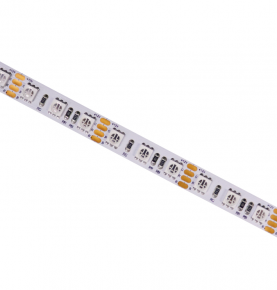 DC12V 5050 RGB LED strip with 84 LEDs per mete
 Chuanglian CYX-100-24P 100W 24V IP67 WATERPROO
 DC24V 2835 LED strip with 168 LEDs per meter
 MeanWell LRS-350-12 350W 12V SWITCHING POWER S
  DC24V 2835 LED strip with 240 LEDs per meter
  Anna
Anna ANNA
ANNA